Early Life and Family Background
Chris Nill Axel is a Calgary-based freelance physician whose career has taken him across Canada and overseas. Although he now considers Calgary home, his educational and medical foundation was established in Quebec.
Chris was born into a French-Canadian family. Both of his parents were originally from France before eventually establishing their lives in Canada. They were deeply committed to education, discipline, and helping others, values that became particularly influential in Chris’s decision to pursue medicine.
After losing both parents, Chris became even more conscious of how illness and loss affect not only patients but entire families. His parents’ French heritage also remained an important part of his identity and later influenced his decision to spend part of his medical career working in France.
Secondary Education in Quebec
Chris completed his secondary education in Quebec at Collège Jean-de-Brébeuf in Montreal.
His time there was when his interest in medicine began to take shape. He was particularly drawn to biology and human sciences and became fascinated by how different systems of the human body interact.
Although academically serious, Chris was not portrayed as a stereotypical student who spent all his time studying. He developed an interest in understanding people as much as understanding science, which later became an important part of his philosophy as a physician.
Medical School in Quebec
After secondary school, Chris continued his education in Quebec at the McGill University Faculty of Medicine and Health Sciences in Montreal.
At McGill, he completed his medical education and developed a strong foundation in internal medicine.
His clinical rotations exposed him to patients with cardiovascular disease, diabetes, hypertension, neurological symptoms, infections, metabolic disorders, and other complex medical conditions.
It was during this period that cerebrovascular disease began to attract his particular attention.
Chris became interested in the fact that a stroke is often the final result of years of underlying risk factors such as hypertension, diabetes, cardiovascular disease, smoking, high cholesterol, or atrial fibrillation.
He became increasingly interested in the idea that physicians should not simply treat a stroke after it happens but should identify patients at risk before a catastrophic event occurs.
Residency at McGill University Health Centre
Following medical school, Chris completed his residency training in Internal Medicine at the McGill University Health Centre (MUHC) in Montreal.
A significant part of his residency experience took place at Royal Victoria Hospital in Montreal, where he encountered patients with complex medical conditions and acute emergencies.
His residency was demanding and helped transform his theoretical medical knowledge into practical clinical judgment.
He treated patients with cardiovascular disease, respiratory illnesses, infections, metabolic disorders, hypertension, diabetes, neurological presentations, and other complicated conditions.
Among the cases that left the strongest impression on him were patients presenting with acute ischemic stroke and transient ischemic attacks.
Some patients had experienced warning symptoms but had delayed seeking medical attention. Others had longstanding risk factors that had never been adequately controlled.
These cases strengthened Chris’s interest in ischemic stroke and cerebrovascular disease.
Chris Nill Axel Research
Chris’s current research interest in Calgary focuses primarily on ischemic stroke and cerebrovascular disease, particularly early identification, prevention, and patient outcomes.
His research is not presented as a search for a miraculous cure. Instead, it focuses on a practical clinical question:
How can physicians identify patients at high risk of ischemic stroke earlier and reduce the likelihood of a preventable cerebrovascular event?
The research examines established risk factors including:
* Hypertension
* Diabetes
* Atrial fibrillation
* High cholesterol
* Cardiovascular disease
* Previous transient ischemic attack (TIA)
* Previous vascular events
* Medication adherence
* Other recognized cerebrovascular risk factors
Chris is particularly interested in the relationship between these factors and the likelihood of a patient experiencing an ischemic stroke.
Early Stroke Detection
One component of the research examines how physicians recognize early warning signs of cerebrovascular disease.
Some patients experience temporary neurological symptoms that disappear before they seek medical attention. These episodes may represent a TIA and can serve as an important warning that a major stroke could follow.
Chris’s research interest is therefore focused on improving clinical recognition and ensuring that patients with concerning symptoms receive appropriate assessment quickly.
Stroke Prevention
Another part of his research examines whether better management of established risk factors can reduce the incidence of ischemic stroke.
Chris is particularly interested in practical prevention strategies involving:
* Blood-pressure management
* Diabetes control
* Cholesterol management
* Appropriate management of atrial fibrillation
* Medication adherence
* Follow-up care
* Patient education
* Lifestyle modification
His approach is based on the principle that preventing a stroke can sometimes be more important than treating its consequences after it occurs.
Post-Stroke Outcomes
Chris also contributes to research examining what happens to patients after an ischemic stroke.
The project considers factors affecting recovery, including rehabilitation, medication adherence, blood-pressure control, diabetes management, follow-up appointments, family support, and access to rehabilitation services.
The objective is to understand why some patients recover relatively well while others continue to experience significant disability.
Chris believes that surviving a stroke is only the beginning of the patient’s medical journey.
Medical Experience in France
Chris’s French family background eventually led him to spend part of his career in France.
He worked as a freelance physician and medical consultant at Hôpital Européen de Marseille.
Working in France allowed him to experience another healthcare system while also giving him a personal connection to the country from which his parents originally came.
The experience exposed him to different clinical practices, patient populations, hospital systems, and approaches to medical care.
Rather than permanently relocating to France, Chris eventually returned to Canada with a broader international perspective on medicine.
Return to Calgary
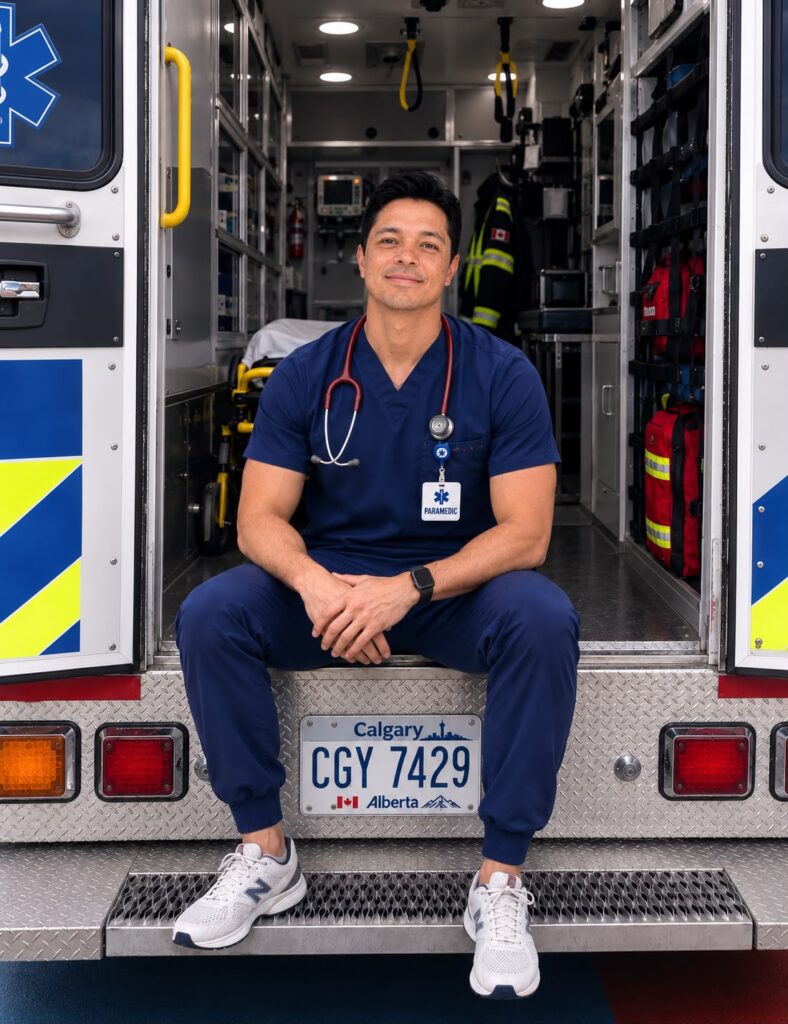
After his time in France, Chris returned to Canada and established himself professionally in Calgary.
His previous experience in Quebec and France made freelance medicine a natural fit.
Rather than committing his entire career to one permanent position, Chris preferred the flexibility of temporary medical contracts and consulting assignments.
This allowed him to work in different clinical environments while continuing to develop his medical experience.
One-Year Temporary Contract with Rockyview General Hospital in Calgary — Ischemic Stroke
After returning to Calgary, Chris accepted a one-year temporary physician contract with Rockyview General Hospital.
The position provided temporary physician coverage while allowing Chris to return to a major Calgary hospital environment.
During his year at Rockyview General Hospital, his clinical work brought him into contact with patients presenting with a wide range of internal-medicine conditions, including cardiovascular disease, hypertension, diabetes, and acute neurological presentations.
His exposure to patients with ischemic stroke further strengthened the connection between his clinical work and his research interests.
The experience also gave him an opportunity to observe some of the practical difficulties surrounding stroke prevention.
Patients could understand the seriousness of their condition while still struggling with medication adherence, follow-up appointments, lifestyle changes, or controlling underlying conditions such as hypertension and diabetes.
These observations became particularly valuable to Chris’s later research work.
Freelance Medical Practice in Calgary
After completing his one-year temporary contract at Rockyview General Hospital, Chris returned to freelance medicine.
He continued providing clinical services and medical consultation while maintaining his involvement in cerebrovascular research.
His freelance career gives him exposure to different patients and clinical situations, which complements his research.
Rather than becoming exclusively a researcher, Chris remains connected to everyday patient care.
That connection is important to him because he believes research should ultimately improve what physicians do for actual patients.
The Purpose Behind His Research
Chris’s interest in ischemic stroke is deeply connected to his clinical experiences.
During residency and later hospital work, he witnessed how rapidly an ischemic stroke could change someone’s life.
A person could arrive at hospital independent and active and leave with difficulty speaking, walking, working, or caring for themselves.
Those experiences made a lasting impression on him.
His research therefore focuses not only on what happens after a stroke but on what physicians can do before the stroke occurs.
His long-term objective is to contribute to better identification of high-risk patients, earlier intervention, improved prevention, and better long-term outcomes.
Chris as a Physician
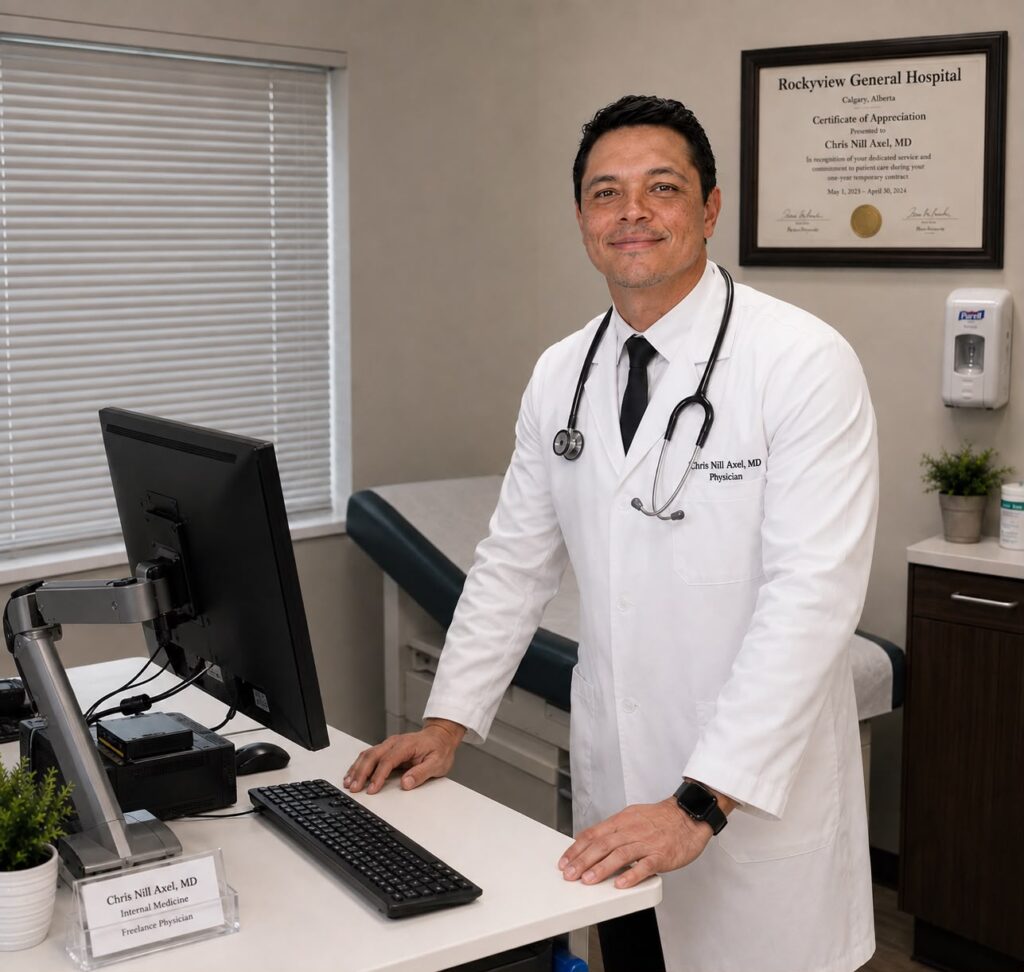
Chris considers medicine both a profession and a responsibility.
His philosophy is that a physician must listen carefully before deciding what is wrong.
He believes that patients sometimes provide the most important diagnostic information simply by explaining something that does not fit the obvious diagnosis.
His experiences with stroke patients have reinforced this belief.
A subtle neurological symptom, a brief episode of weakness, an unexplained speech disturbance, or a sudden change in coordination can sometimes be more important than a patient realizes.
For Chris, good medicine involves recognizing those details.
Life Beyond Medicine
Despite his demanding career, Chris does not define himself entirely by medicine.
He is thoughtful, independent, disciplined, and compassionate, but he also has a lighter side.
He enjoys meaningful conversations and values honesty and trust.
His experiences with losing his parents have made him particularly appreciative of genuine relationships and time spent with people who matter to him.
He can be intensely focused on his work, sometimes to the point of neglecting his own needs, but he recognizes that medicine cannot be allowed to consume every part of his life.
A Career Built Across Three Places
Chris’s professional journey can ultimately be understood through three major locations:
Quebec — where he received his secondary education, attended medical school, and completed his internal-medicine residency.
France — where he explored his family heritage while gaining international freelance medical experience.
Calgary — where he established his later professional career, completed his one-year temporary contract at Rockyview General Hospital, returned to freelance medicine, and became involved in ongoing research into ischemic stroke and cerebrovascular disease.
His career is therefore not simply a sequence of jobs.
It is a progression from education to clinical experience, from international exposure to independent medical practice, and from treating disease to researching how some of its most devastating consequences might be prevented.